


Special Reports/Legal Points

Acquiring an educational institution requires careful consideration of how transaction structure, regulatory approvals and operational compliance interact. For investors, the legal assessment must extend beyond the acquisition itself to the institution’s ability to continue operating after completion.

Vietnam’s economic transformation continues to create significant opportunities for investors and businesses, while also introducing new regulatory challenges arising from global economic uncertainty, supply chain realignment, technological disruption, and sustainability-driven reforms.

Hiện nay, các cơ quan có thẩm quyền đang tiến hành lấy ý kiến đối với dự thảo khung pháp lý điều chỉnh việc thành lập và hoạt động của công ty quản lý tài sản và quỹ đầu tư trong phạm vi Trung tâm Tài chính Quốc tế Việt Nam (Vietnam International Financial Center – IFC). Dự thảo đề xuất các quy định liên quan đến cơ cấu quản trị, yêu cầu về vốn, cơ chế vận hành cũng như thủ tục đăng ký quỹ.

Việt Nam đang bước vào giai đoạn quyết định trong tham vọng trở thành một trung tâm tài chính cạnh tranh trong khu vực. Chính phủ đang khẩn trương hoàn tất Dự thảo Nghị định về Thành lập và Vận hành Trung tâm Tài chính Quốc tế (IFC), với chỉ đạo dứt khoát của Thủ tướng yêu cầu các trung tâm đầu tiên tại TP. Hồ Chí Minh (TPHCM) và Đà Nẵng phải sẵn sàng đưa vào vận hành bước đầu ngay trong tháng 11. Đây được đánh giá là một trong những quá trình xây dựng khung pháp lý nhanh nhất từng được thực hiện cho một dự án hạ tầng tài chính mang tầm quốc gia.
Vietnam is entering a decisive phase in its ambition to position itself as a competitive regional financial hub. The Government is expediting completion of the Draft Decree on the Establishment and Operation of International Financial Centres (IFCs), with a firm directive from the Prime Minister that the first centres—located in Ho Chi Minh City (HCMC) and Da Nang—must be ready for initial operation within November. This marks one of the fastest regulatory build-outs ever attempted for a financial infrastructure project of national significance.
Việc thành lập Trung tâm Tài chính Quốc tế (IFC) tại Việt Nam là một chủ trương quan trọng, thu hút sự quan tâm lớn cả trong nước và quốc tế. Trong bối cảnh hội nhập kinh tế toàn cầu ngày càng sâu rộng và dòng vốn quốc tế dịch chuyển mạnh mẽ, Việt Nam – với vị trí địa lý chiến lược cùng nền kinh tế năng động – đang đứng trước “cơ hội vàng” để định vị mình trên bản đồ tài chính thế giới. Bài viết này phân tích chi tiết khuôn khổ pháp lý hiện hành điều chỉnh Trung tâm Tài chính Quốc tế tại Việt Nam.
The establishment of a Vietnam International Financial Centre (IFC) is a key policy initiative that has garnered significant attention both domestically and internationally. Amidst increasingly deep global economic integration and the strong shift in international capital flows, Vietnam, with its strategic geographical position and dynamically developing economy, is presented with a golden opportunity to position itself on the global financial map. This article will provide a detailed analysis of the current legal framework governing International Financial Centre in Vietnam.

Mr. Phung Anh Tuan, Managing Partner of VCI Legal, Vice President of VAFI, and Secretary General of FICAC, delivered a keynote presentation titled “The Brave New Laws on Digital Assets and International Financial Centers in Vietnam.”
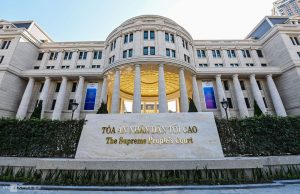
Vietnam is in the midst of one of the most significant judicial reforms in decades, aimed at enhancing modernization, transparency, and efficiency. At the core of these reforms are three pillars: the restructuring of the court system, the establishment of e-Courts, and the gradual adoption of artificial intelligence (AI) in judicial activities. Together, these developments address both the domestic need for more effective dispute resolution and Vietnam’s alignment with international standards of justice in the digital era.


